Blog
|
FREE SHIPPING ON ALL ORDERS

How to Pick a Glass Terrarium at Home for Low-Maintenance Plant Decor

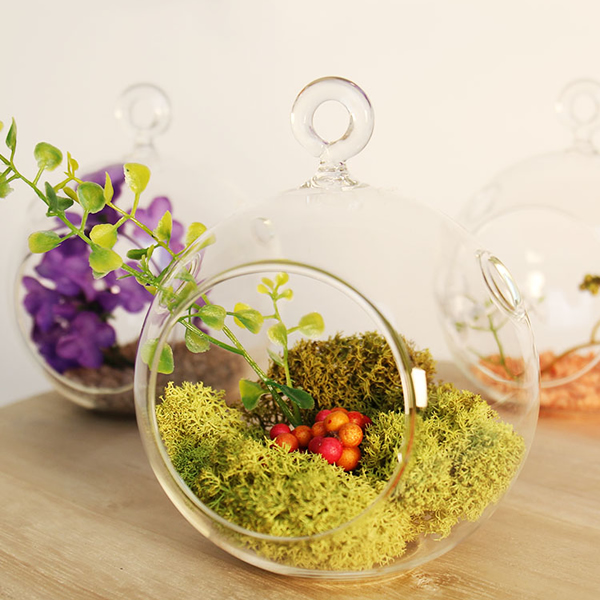
A terrarium can look perfect on a shelf and still be difficult to maintain if the container and plants do not suit each other. A sealed dome may hold too much humidity for succulents, while an open bowl may dry out ferns too quickly.
The easiest terrariums are the ones where the glass shape, opening, plants, light, and moisture level work together.
At Glass Vases Depot, glass terrariums come in bowl, hanging, geometric, cloche, bell jar, and lidded styles, making it easier to match the container to both the plant and the room.
Shop Glass Vases Depot glass terrarium containers for easy-care indoor plant displays and decorative greenery.
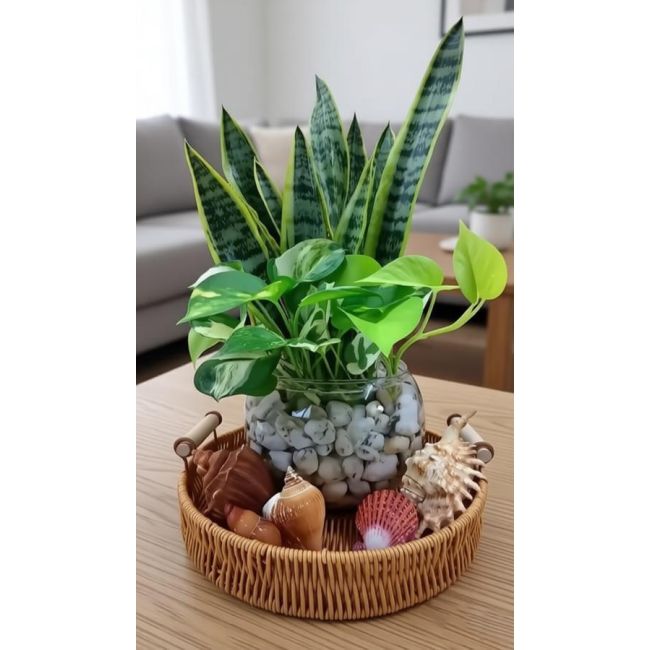
Browse glass terrarium containers here: https://www.glassvasesdepot.com/wood-metal-planter/terrarium-containers?_=1786611877748
Start with open or closed
One of the easiest mistakes in terrarium styling is choosing a shape first and assuming any plant will adapt. In reality, the glass environment affects moisture retention, airflow, and how often the arrangement will need attention. That is why low-maintenance terrariums usually begin with the question of whether the container should stay open or hold humidity.
Closed terrariums retain moisture and suit humidity-loving plants such as Fittonia, moss, small ferns, Peperomia, and Pilea. Open terrariums provide more airflow and are generally better for succulents, cacti, and air plants. For easier care, it usually makes more sense to choose the plants first and then match them with the right glass environment.
13" Glass Cloche Terrarium with Black Wood Base, Plant Cover
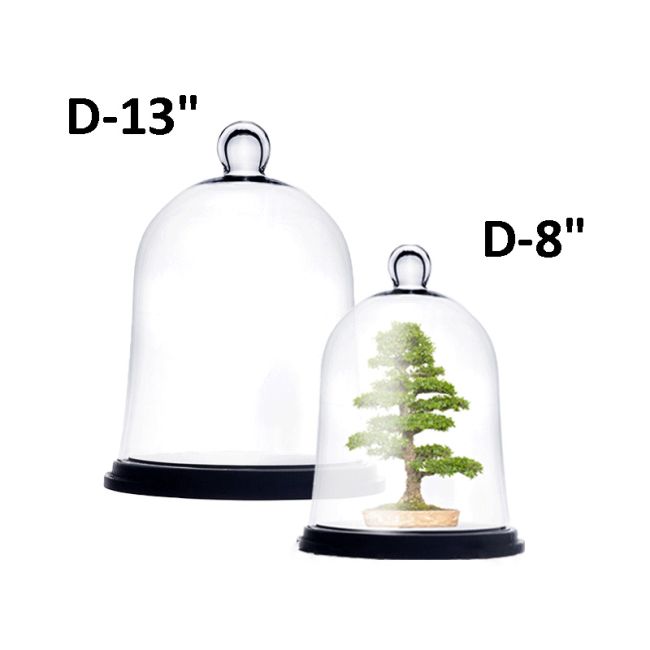
This glass cloche with a black wood base is ideal for compact, moisture-loving plants and moss displays, while the base adds stability and a clean, modern look.
Pay attention to the opening
The opening of a terrarium changes more than access. It also influences airflow, moisture balance, and how manageable the arrangement feels over time. A wide opening makes watering, pruning, and rearranging easier while allowing more air circulation. Narrow or lidded containers hold humidity better but can be harder to maintain.
For beginners, a reasonably wide opening is often the more forgiving choice. It gives enough access for routine care and helps reduce the risk of trapping too much moisture too quickly.
Choose plants with similar needs
A terrarium usually becomes difficult when plants are chosen for appearance instead of compatibility. Ferns and moss prefer a different environment from most succulents. Mixing them in the same vessel often means one group is getting the wrong conditions no matter how carefully it is watered.
A better approach is to build either a humid tropical arrangement or a dry open arrangement so every plant receives similar care. This keeps maintenance simpler and helps the display stay healthier for longer.
Use an open bowl for succulents
Succulents generally perform better in open glass containers where moisture can escape more easily. They tend to struggle in overly humid glass environments, especially when there is limited ventilation. For that reason, bowls and open-sided terrariums are usually a more suitable choice.
A slanted bowl can also make planting easier because the lower front opening gives better access to the soil and plants.
Glass Terrarium Bowl Slanted Slant Cut For Succulent Plant Container
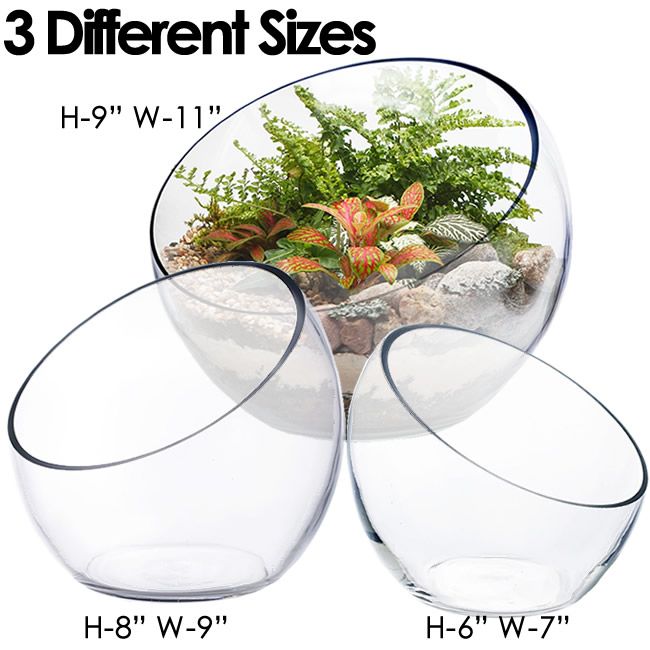
This style is available in multiple sizes for shelves, tables, and larger displays.
Leave room for growth
A terrarium that looks completely full on day one may become overcrowded surprisingly quickly. Plants expand, roots settle, and once the arrangement starts to mature, a tightly packed container can become harder to manage and less attractive visually.
Leave some space around the plants and choose compact or slow-growing varieties when possible. A slightly larger container often means less pruning later and gives the arrangement a calmer, more intentional look.
Large Glass Bell Cloche Display Dome, H:16" D:12"
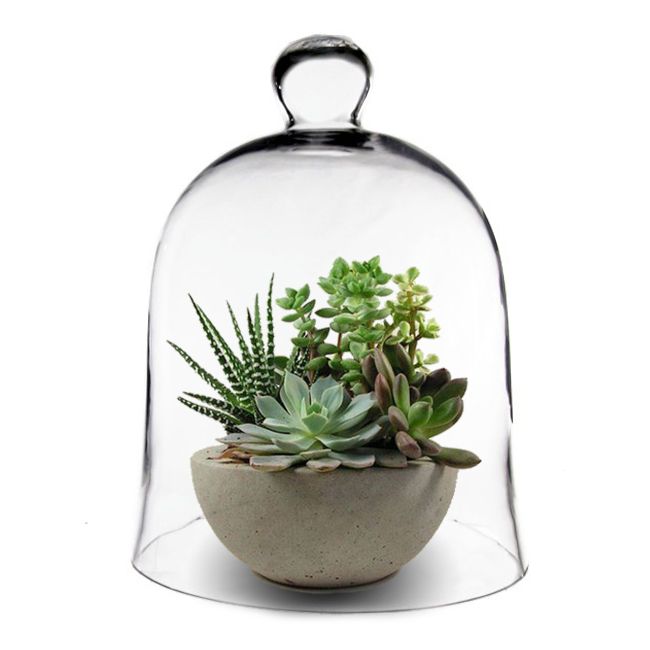
The taller shape gives plants more vertical space while keeping the footprint relatively compact.
Use geometric terrariums as part of the décor
Some terrariums contribute decorative structure even before plants are added. Geometric glass terrariums do this especially well because the faceted shape brings a more architectural feel to a shelf, console, or tabletop. They are often a strong choice when the goal is a more modern or restrained styling result.
They work particularly well with small succulents, air plants, moss, stones, and simple arrangements that do not need dense planting.
Geometric Glass Terrarium Bowl, H-6" Hexagon Prism
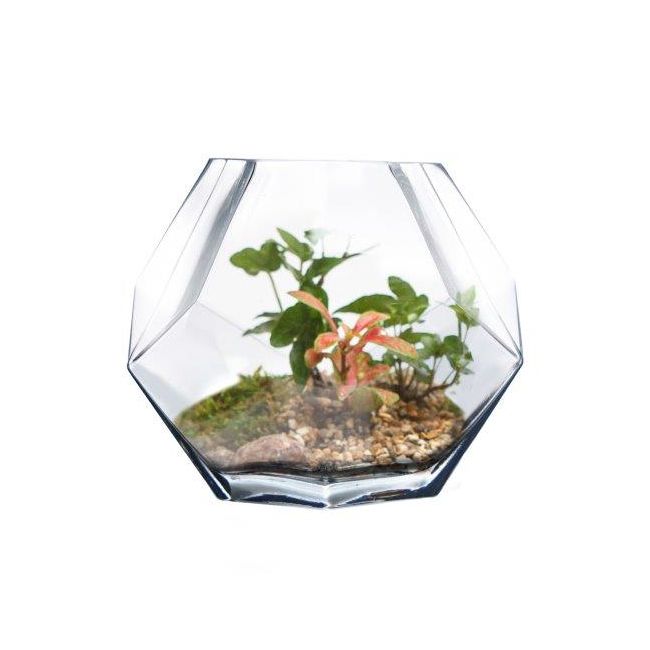
This style is a good fit for desks, bookshelves, consoles, and side tables.
Match the size to the room
Terrariums tend to work best when their scale feels proportional to the furniture around them. Small terrariums suit desks and shelves. Wider bowls work well on coffee and dining tables, while taller cloches add height without taking up too much surface space.
The goal is not simply to fit the container into the room, but to make it feel visually balanced within the space.
Glass Cloche Display Dome, H:10" D:9.75"
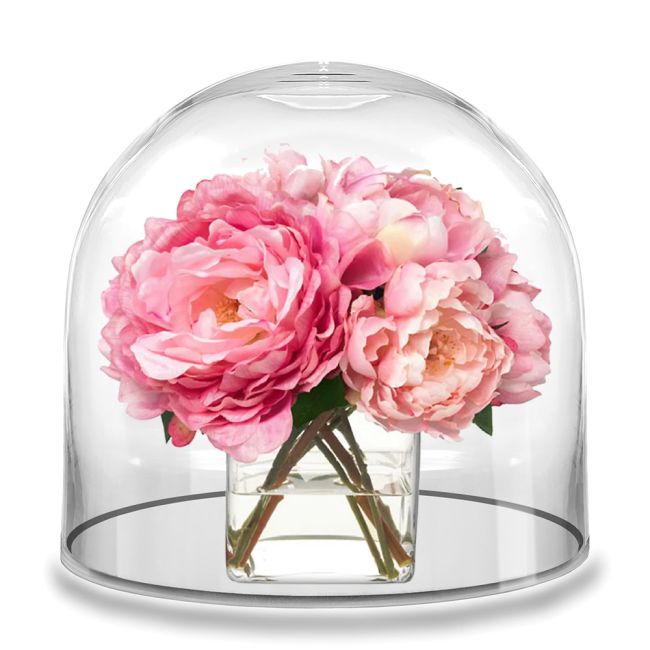
Its medium size works well for compact tabletop plant arrangements.
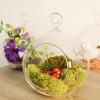
Try a hanging terrarium in smaller spaces
Not every room has spare shelf or table space for plant décor. Hanging terrariums solve that problem by bringing greenery into a room without using a flat surface. They also create a lighter, more suspended look that works well near windows or in grouped displays.
Glass orbs are particularly useful for air plants and can also be styled with moss, stones, or other lightweight decorative materials.
6 pcs Glass Hanging Terrarium, H-5" D-4" Glass Ball Orbs, Double Hooks
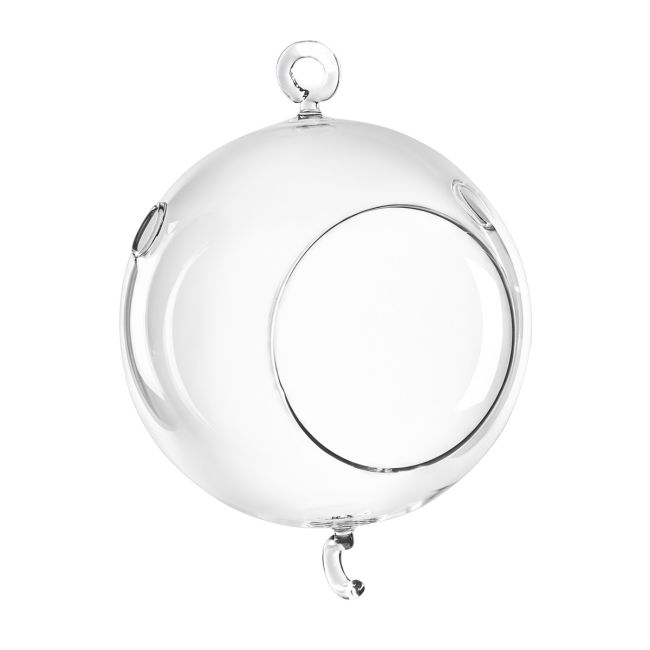
They work well near windows or as grouped hanging displays.
Get the soil right first
The growing medium matters more than the decorative top layer. Succulents need fast-draining soil, while tropical terrarium plants prefer a medium that holds some moisture without staying waterlogged. If the soil is wrong, even a suitable glass container will become harder to manage.
Once the soil is appropriate, stones, gravel, sand, moss, or bark can be added as decorative finishes.
Use the right light
Most terrarium plants prefer bright, indirect light. Closed glass can heat up quickly in strong direct sunlight, so the placement should be based on the needs of the plants rather than simply choosing the brightest window in the room.
This is one of the simplest ways to avoid stress, overheating, and moisture imbalance inside the container.
Watch condensation instead of following a watering schedule
Closed terrariums recycle moisture and usually need much less watering than ordinary houseplants. That makes them appealing, but it also means fixed watering schedules are often less useful than observation.
Light condensation is normal. If the glass stays heavily fogged and the soil remains saturated, open the container temporarily to release excess moisture. Open terrariums dry faster but should still be watered according to the soil rather than a rigid calendar.
Keep the design simple
Terrariums usually look better when they are not overcrowded. One main plant type, one supporting texture, and a few stones may already be enough to create a complete arrangement. Because clear glass adds depth and reflection on its own, the inside does not need too many decorative elements.
That restraint often makes the terrarium feel calmer, cleaner, and easier to maintain.
Common mistakes to avoid
The biggest mistake is choosing plants for appearance instead of growing conditions. Overwatering, mixing plants with very different moisture needs, and packing too many plants into one vessel can all make care more complicated than it needs to be.
A low-maintenance terrarium works best when the plant selection and container are simple and compatible from the start.
One more idea that works well
Instead of building one large terrarium, it can be easier to group two or three smaller containers together. One can hold succulents, another an air plant, and another moss or decorative stones. The repeated clear glass keeps the display coordinated while each plant gets the environment it needs.
This approach also gives more flexibility in styling shelves, side tables, and smaller corners of a room.
Final thoughts
The best way to choose a glass terrarium at home for low-maintenance plant decor is to match the container to the plants rather than choosing by appearance alone. Closed styles suit small humidity-loving plants, while open bowls, geometric containers, and hanging terrariums work better for plants that prefer more airflow.
Choose the right environment, leave room for growth, use suitable soil, and keep the styling simple. A well-matched terrarium should make indoor greenery easier to enjoy, not harder to maintain.
To explore glass bowls, geometric terrariums, hanging containers, cloches, bell jars, and other glass terrarium styles from Glass Vases Depot, visit https://www.glassvasesdepot.com/wood-metal-planter/terrarium-containers.
August 17, 2026
|
View: 22
Sea Glass Decor Ideas for Shelves, Tables, and Coastal Interiors
August 31, 2026